
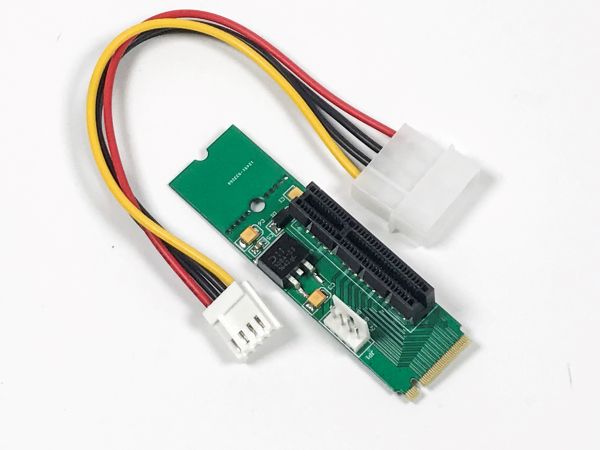

PCI-e 1X/4X Card to M.2 M Key 4 Lane Crypto Mining Adapter with CLKREQ
$5.75
Availability:
In stock
Only 16 left
Part #
M2-1522-CLKREQ
PCI-e 1X/4X Card to M.2 M Key 4 Lane Adapter with CLKREQ
PCI-e 1X/4X Card to M.2 M Key 4 Lane Adapter with CLKREQ
Micro SATA Cables PN # M2-1522-CLKREQ
| Part # | M2-1522-CLKREQ |
|---|---|
| Bar Code (UPC) | 646791003440 |
Write Your Own Review
We are proud to offer an everyday volume discount program. Simply enter the Promo Code: VOLUME in the Cart to receive the following savings.
Save when you spend:
- Spend $300.00+, save 5% on your order
- Spend $500 or more and save 10% on your order
- Enjoy Free Shipping on all domestic US orders over $100
- Discounts will be applied with entry of Promo Code "VOLUME" in the Discount Codes section of the shopping cart
- Discounts may not be used with other promotions
- Discounts are based on order subtotals (before tax & shipping)
- Discounts are on the current total order amount only
Don't see exactly what you need?
Our business is built upon our expertise and our ability to respond to special requests. Our philosophy is that "today's special order may become tomorrow's best seller". In fact special orders are part of how we've become the "go-to" supplier for hard to find cables, connectors and adapters.